
When I worked at a retail store, one of the hardest pieces of hockey equipment to fit properly was the hockey skate. With other equipment, you can visually see how things fit, whether it be gloves with seeing their fingers in the palms or elbow pads by seeing the exposed areas. For skates, everything is hidden away and you are stuck relying on the customer’s feedback. Unfortunately with the smaller hockey shops closing up and bigger box like stores opening and taking over, it can sometimes be difficult finding an employee who has the best knowledge and experience and far too often people rely on skate fit scanners. So I created this video (which I highly suggest you watch, because it shows actual examples of what you should look for) and article in hopes of helping more people get into properly fitted skates!

One of the most challenging parts of skate fits comes straight from the manufacturers themselves… with their “suggested sizing” on their size charts, boxes, or tongues. Generally speaking this sizing difference between US shoe sizing and skates is a minus 1.5, in other words a skate 1.5 sizes smaller than shoe size is the recommended size. Shoe sizes themselves are an unreliable measuring guide because of differences in shoe sizing between brands and models but also because A LOT of people are wearing shoes that are also too big. Shoes also have different purposes, so it makes sense to wear something that might have a bit more room if they are leisure footwear made for comfort vs a hiking shoe where you need to ensure your foot isn’t slipping around while you climb down a mountain.
Help support this channel & website and buy hockey equipment through this link (I get a kick back in sales) if you are in the US at Pure Hockey or if you are in Canada through Hockey Supremacy
What the full skate fit sizing guideline on YouTube below!
As a baseline, I always suggest hockey players and goalies (minus Bauer Konekt, but that is a different video and post) to go 2 to 2.5 sizes smaller than your shoe when getting fit with a skate. I also always suggest STARTING at the 2.5 sizes smaller and going up from there. You want your skates to be a snug as possible to ensure your foot doesn’t move around inside the skate itself. With a proper skate fit, you WILL feel the sides of the skates and you should be at least brushing your toes with the end of the toecap when standing up. Watch the full video to see how sitting down makes your feet fit differently compared to when standing.
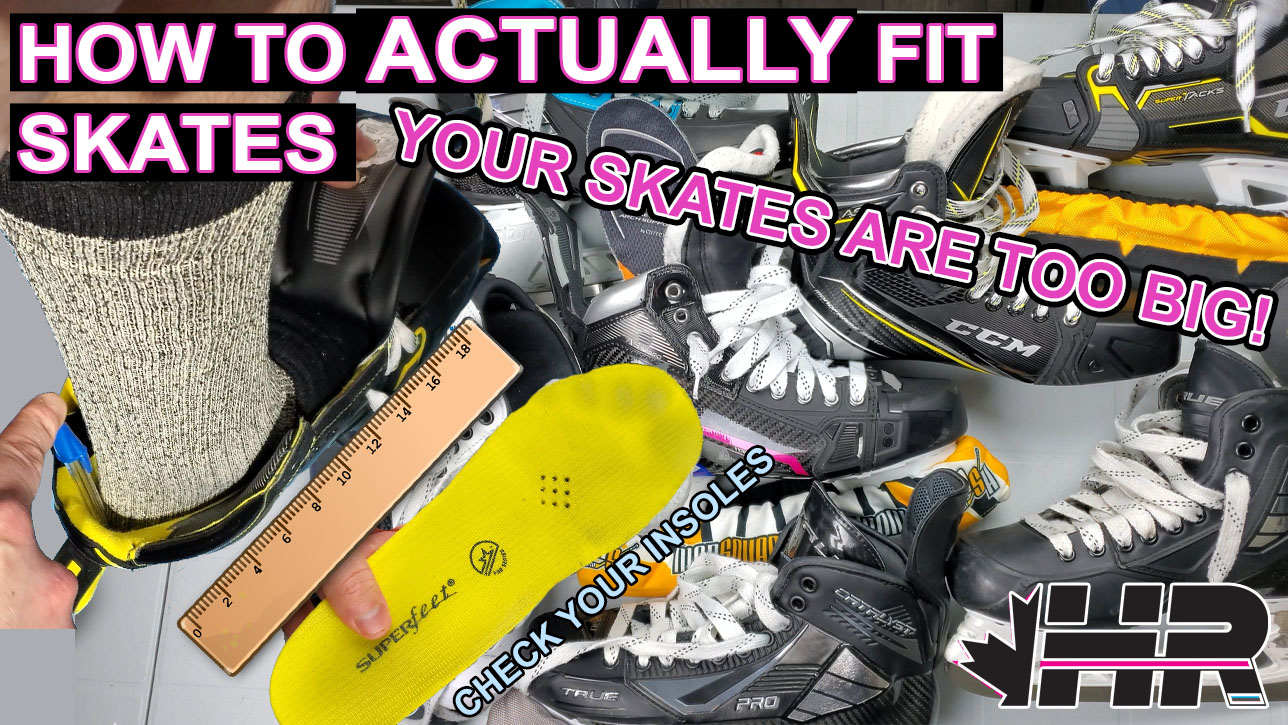
Looking at your skate insoles can also tell you A LOT about your skate fit, in the video above, I show off a pair of SuperFeet Pro Carbon insoles, of which you can see exactly where my toes end up in the insole… which gives you a nice glance into where they end up inside the skate as well! While insoles can be very helpful for this, you have to ensure your insoles are cut properly and are the right size for the skate, if you have a Size 8 insole in a Size 9 skate, your toes might be on the end of the insole, but the insole is no where near the end of the skate itself. This really should only be an issue with aftermarket cut-to-fit type insoles.
My favourite method of testing proper skate length is the pen or pencil test behind the heel of the skate. This test requires the skate to be loosened down so you can pull the tongue VERY forward, which allows the person being fit to push their feet forward until all of their toes are touching the toe box. Pulling their feet forward like this allows you to attempt to slide a pen or pencil down the back of the skate, if you can touch the bottom of the skate the person is in a skate that is too big for them, but usually at least half a size.
One of the biggest mistakes and common decisions that end up going to skate that is too big is sizing up for width issues. Often times people with wider feet have discomfort in skates that are the proper length, unfortunately these people are in the minority in terms of length to width sizing especially among skaters looking for higher end skates. Companies have recently shrunk their skate sizing options, so the wider fitting skate lines have been removed to cut down on the slower selling products and to create fewer SKUs. Bauer Nexus was at one point the go to with wide fitting feet, and the Nexus EE width was more like an EEE or EEEE compared to other skate lines. Since wider skates are usually harder to sell, stores also end up carrying less inventory, so someone who would need a W or Fit 3 in Bauer skates might not be able to buy them let alone try them on because of lack of stock. Often the case with this, the customer will end up buying a size up in a smaller width to compensate. While I will never recommend this decision, I do understand people don’t have the ability to buy a fully custom skate.
I highly suggest watching the video on YouTube as the demonstration works a lot better with actual examples, it is long, but it should also be very useful!
If this video and article helped you with getting a better idea on skate fit, it would be greatly appreciated if you helped support this channel by buying hockey equipment through these links (I get a kick back in sales) if you are in the US at Pure Hockey or if you are in Canada through Hockey Supremacy
While I also hate to promote my other things, it has become evident to me it is important to get a viewer base that will help me continue doing reviews like this (I can’t afford to always buy new equipment!).
So please check out my Instagram @hockeyreviewsca and subscribe to me on YouTube
 Hockey Reviews