

The Zegras pro curve has been making its rounds online and on the pro scene as a curve people are often recommending. So much so CCM has created a P86 that is available in some form (I haven’t seen it available on their retail offerings yet). When I got to test out Prostockhockeysticks (PSHS) new model lines, they sent me their Zegras curve called PRO9246 (or RO9246 as my VF model had on it…). Since I had so many people asking about this specific curve I figured I’d do a comparison review of the PRO9246 (P86), the P92/P29, P90TM, and the P28. The P90TM and the PRO9246 both take a blend of the P28 and P92 and mash them together but in pretty different ways.
*** Affiliate link disclaimer ***
The links in this article are affiliate links to the specific retailer that give a percentage of the sale to Hockey Reviews to help continue to make content and do more reviews. Using these links helps fund the channel and is greatly appreciated!

Watch my full comparison review between the P92, P90TM, P86 (PRO9246), and P28 on YouTube here and below. A condensed version will also be available in the future!
Looking at the blade shape in terms of the curve itself from the top and bottom you can see a gradual progression of very aggressive toe (P28) to a more neutral toe (P92). Both of the P90TM and Zegras PRO9246 have a similar overall toe shape but I found the heel of the PRO9246 to play more similar to the P92 that I prefer. Sauce passing from this position felt better in the PRO9246. While it is doable in the P28 I have always found it much easier on the P92 and the P90TM feels like the toe is slightly less open than what is on the PRO9246 and P92. For hard shot like passes I found the PRO9246 more manageable than the P90TM and the P28, but I found I lost out on left and right accuracy. I also had to focus heavily on ensuring the pass release didn’t ride along the toe as much to ensure the pass kept down and didn’t float upwards. This is a VERY personal preference thing and I prefer to make long breakout and end to end passes with the P92. It is easier to keep very hard passes down in the P92, but I am sure with more time and use avoiding the toe on the PRO9246 it would become more managable.
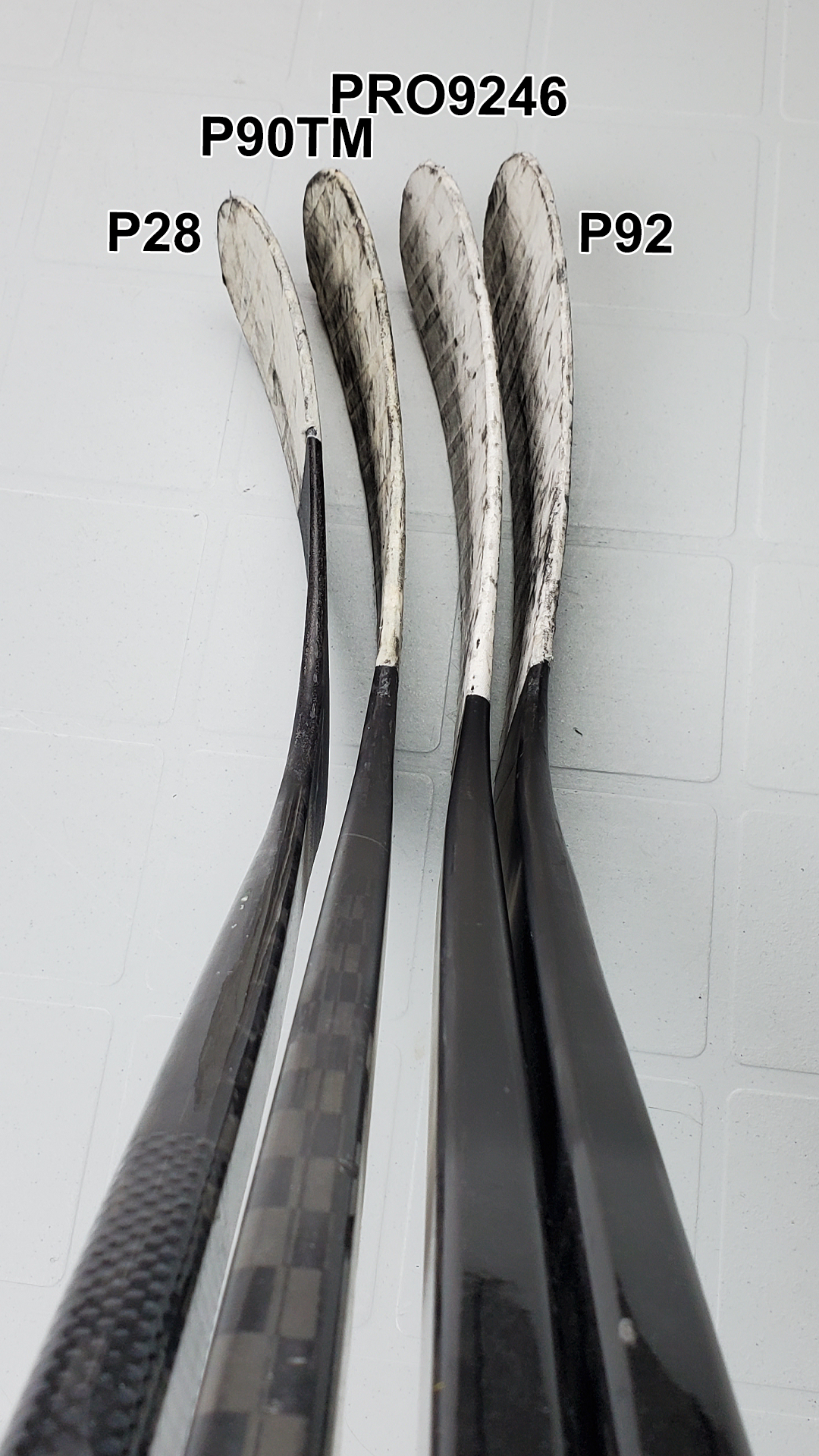
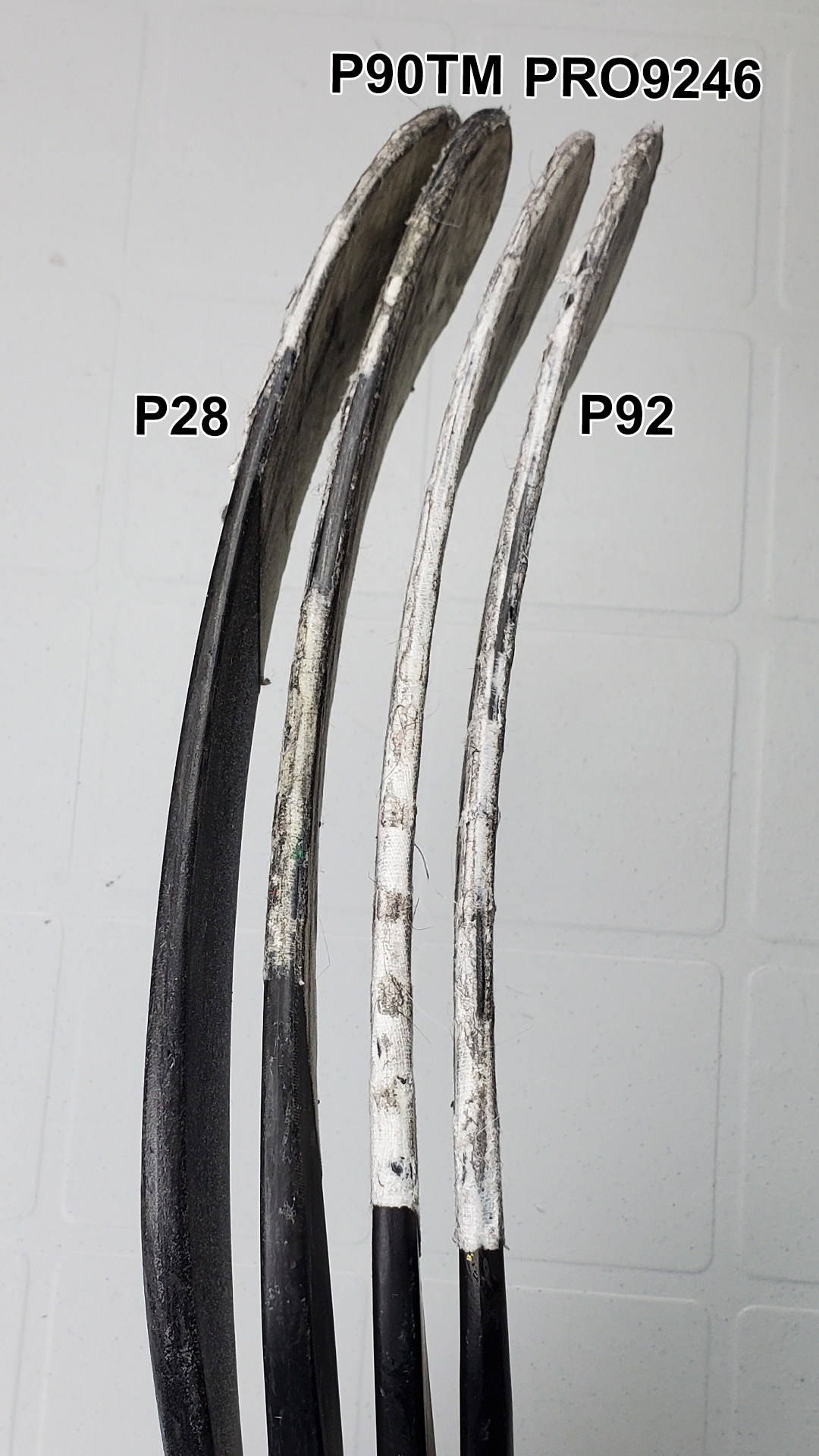
For shooting, the P28 is obviously a top shelf king with the toe curve nature of the blade REALLY emphasizing on getting the puck up high and quickly, it simply takes no effort to get the puck into the air. Both the P90TM and PRO9246 feel more manageable compared to the P28 in this regard coming from someone that the P92 is my preference. Learning to shoot more out of the middle of the blade and trying miss that aggressive toe makes it possible to shoot lower and more “neutral,” while in my experiences I had to use the toe portion of a P28 to get a decent shot off. Since the PRO9246 still has that more aggressive toe if you want it, getting pucks up into the air is quick and very easy. I wouldn’t consider it as easy as the P28 but it is a considerable step up compared to the P92. Once again this is a nice blend of the P28 and P92 but for shooting leaning more on the P28 side of things.
If you are looking to buy a new hockey stick, it would be greatly appreciated if you checked out the links to Pure Hockey if you are in the US and Just Hockey if you are in Canada to help support the website so I can keep making more content and doing reviews!
The rocker is the other big difference between the P28 and P92 curves. With the P28 being considerably more flat. Once again this is completely a personal preference thing! I prefer a more rounded style of rocker so the blade doesn’t “get in the way” when reaching out or pulling the stick in to receive a pass or to try and poke away the puck. I find that often times the toe of the P28 rocker style raises off the ice too much when I am trying to reach for a puck or break up a pass. Where the rounded bottom of the PRO9246 and P92 help with enough blade contact to grab and deflect pucks more easily.
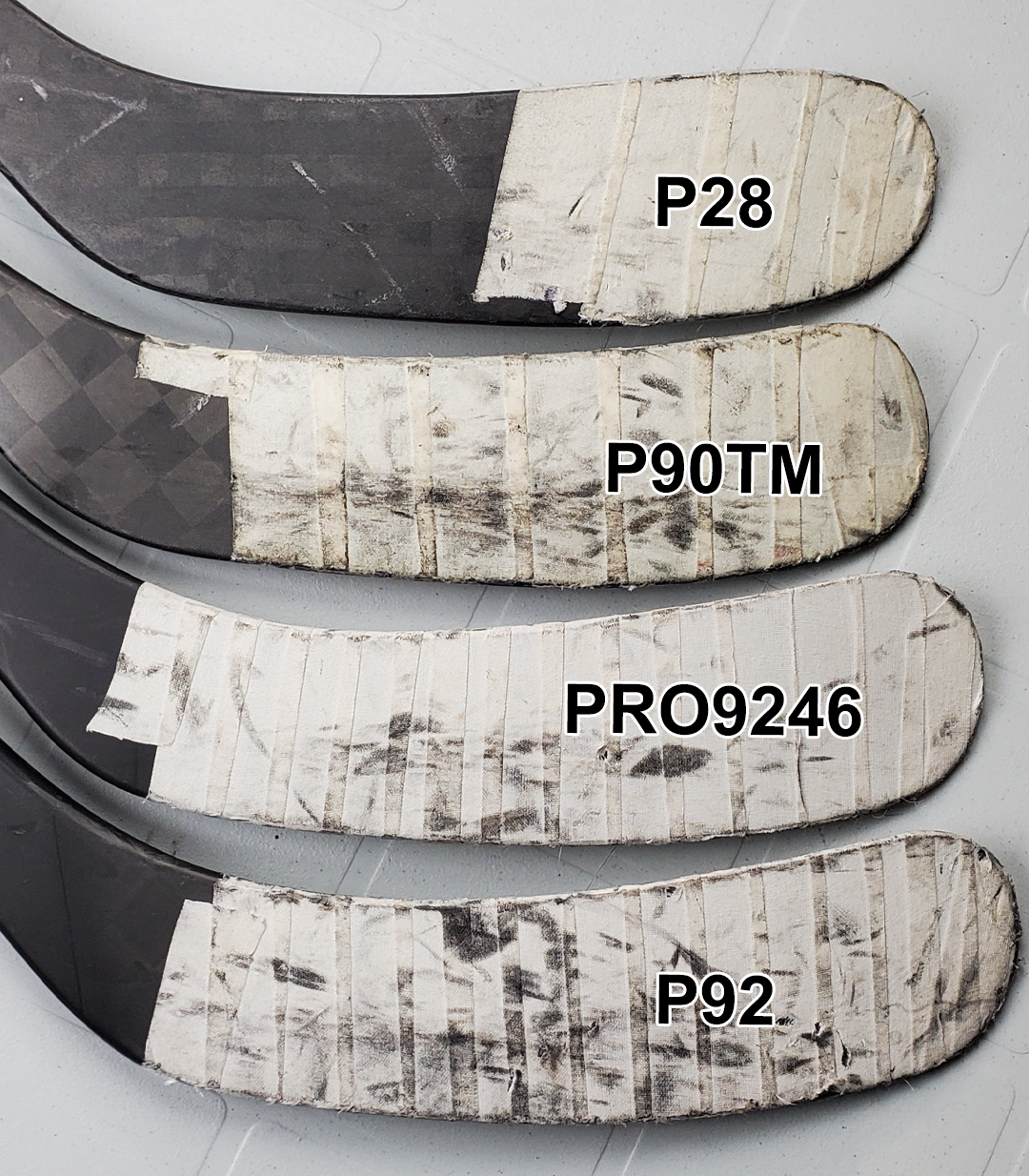
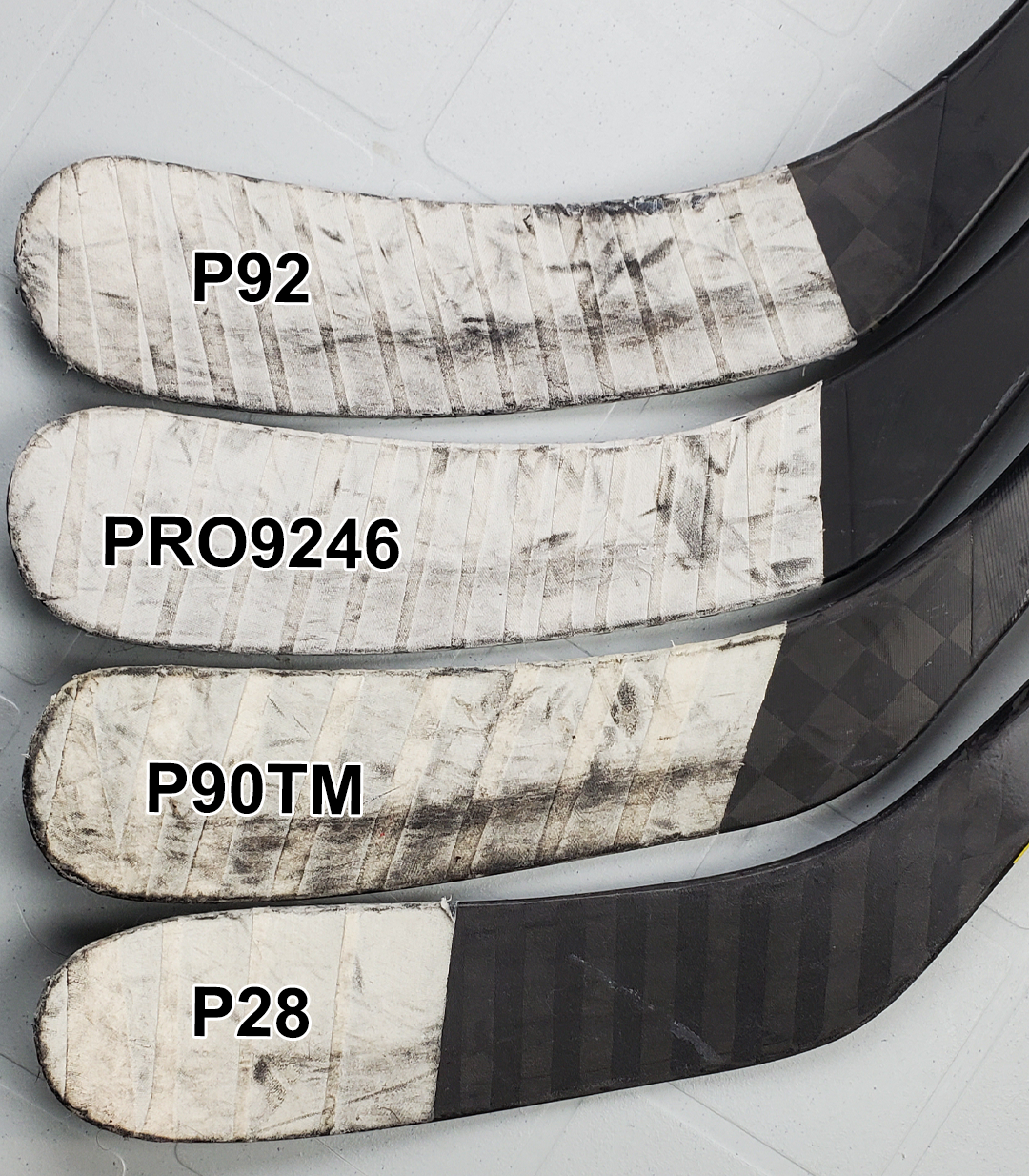
The feels like a dual lie and exact mix between the P28 and P92, with the blade shape offering overall a flatter blade like a P28 but still having a bit of a rocker (the dual lie aspect) so it doesn’t have the downsides of the more extreme shape of the P28. The Zegras PRO9246 takes the blade shape of the P92 completely so you have that more rounded bottom of the blade shape.
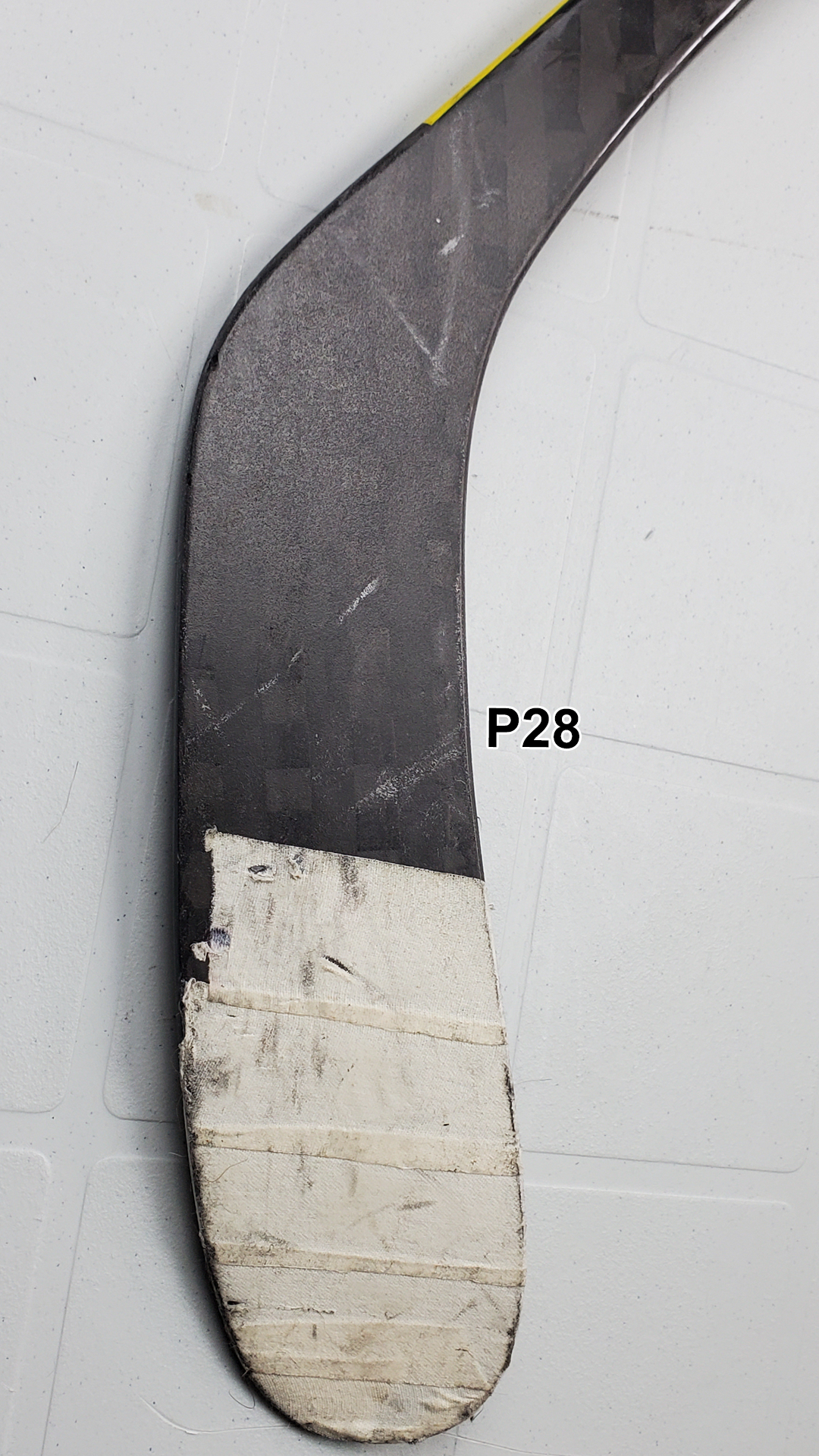
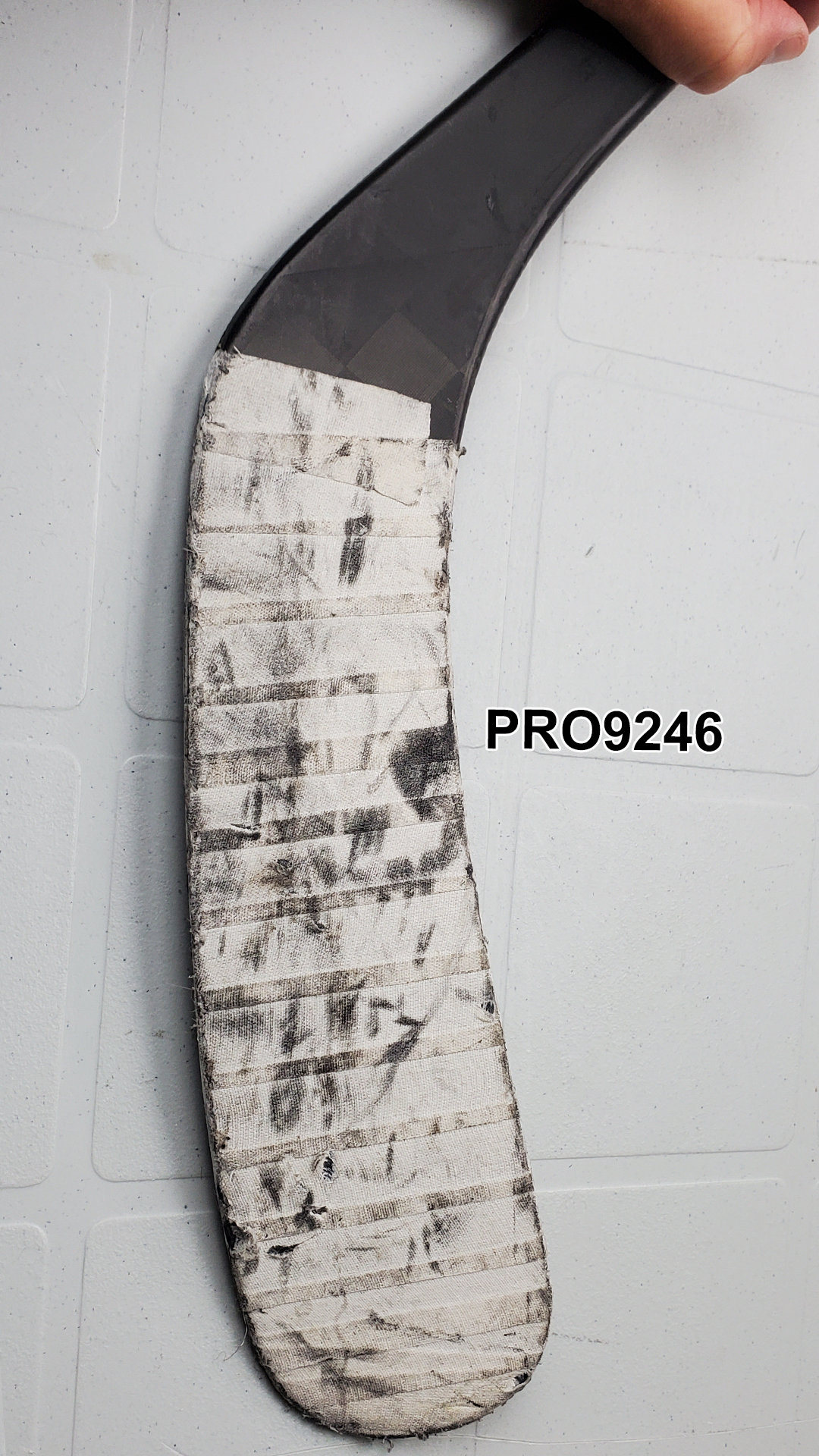
Personally I am really happy the bottom blade shape of the P92 was carried over to the Zegras PRO9246 since it really helps differentiate this blade compared to the P90TM as well as gives the fans of the more rockered blade shape of the P92 a more aggressive toe option.

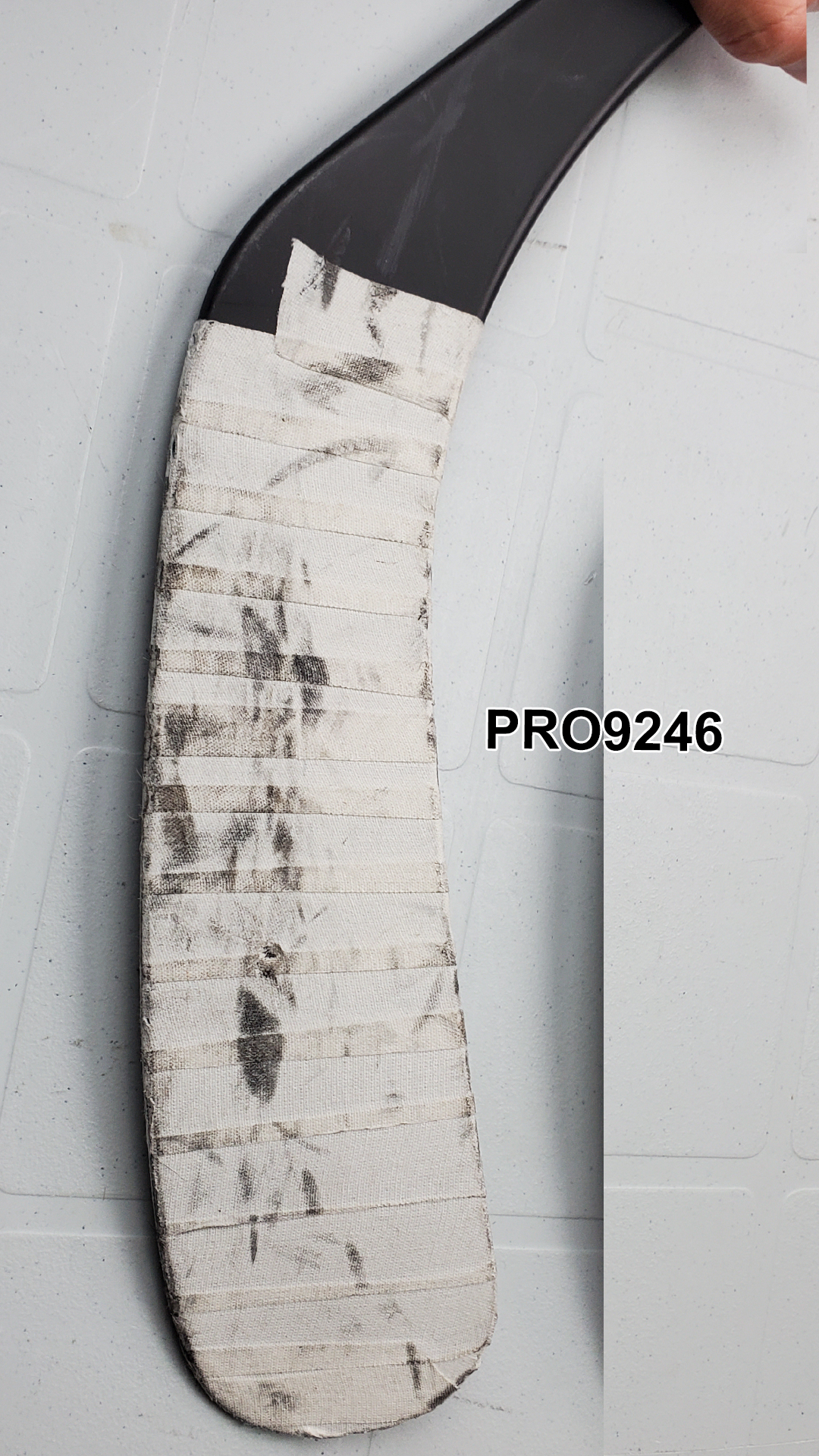
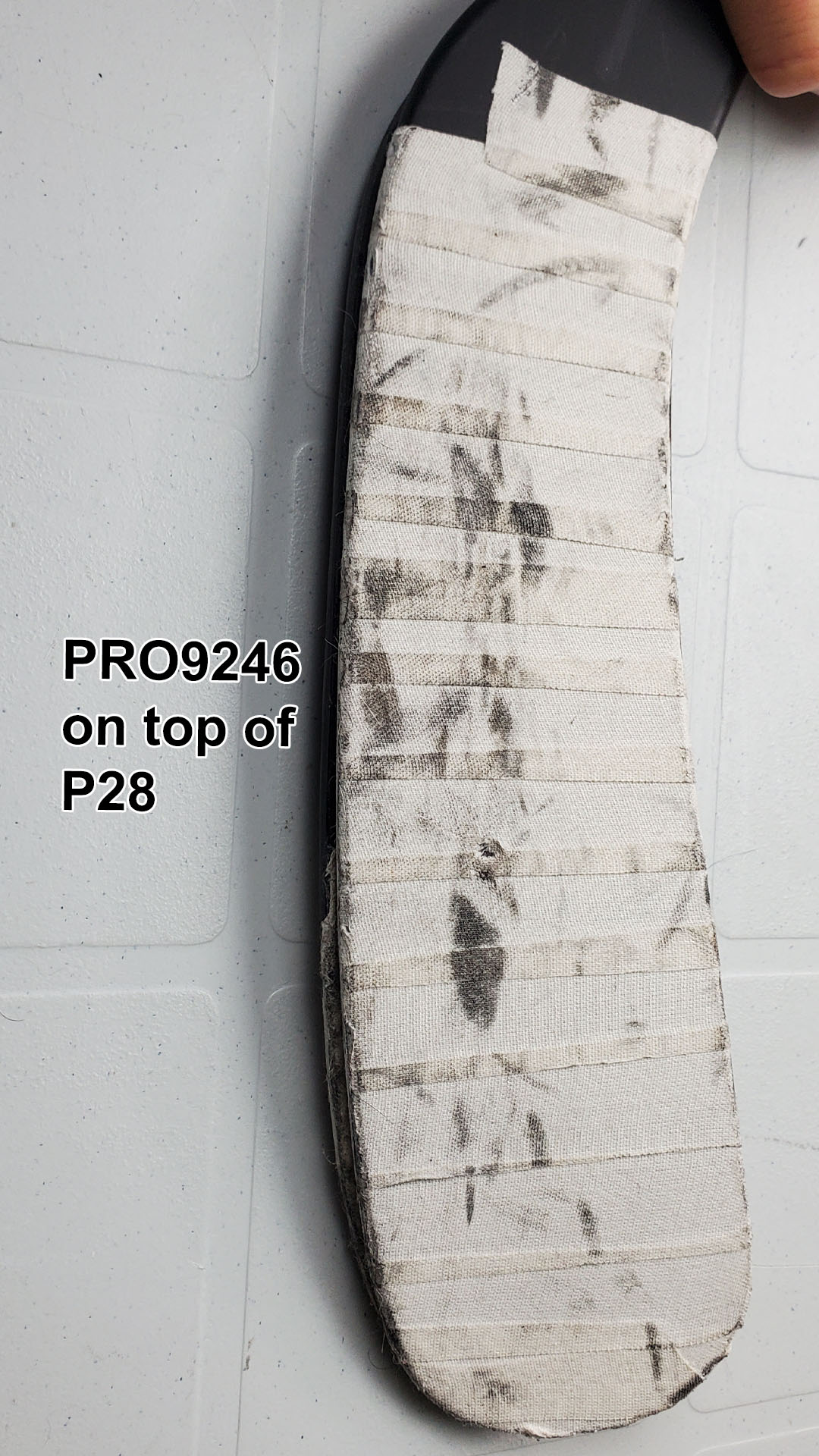
I know people will always ask “what curve is better for stick handling” and the only answer to that is purely “that depends.” People coming from P28 will probably have a more difficult time going to the PRO0246 for stick handling compared to P92 users because P28 skaters will be more used to the blade contact. It has to be said that the more aggressive toe curve on the P28 helps with toe drags and stick handling on the front of the blade, so having that feature on the PRO9246 brings that excellent cradling the puck ability the P28 is know for. But I can see P28 users finding they are losing the puck because of the rocker, which the below images should show the difference in the blade shape of the P28 with the PRO9246 on top of it.
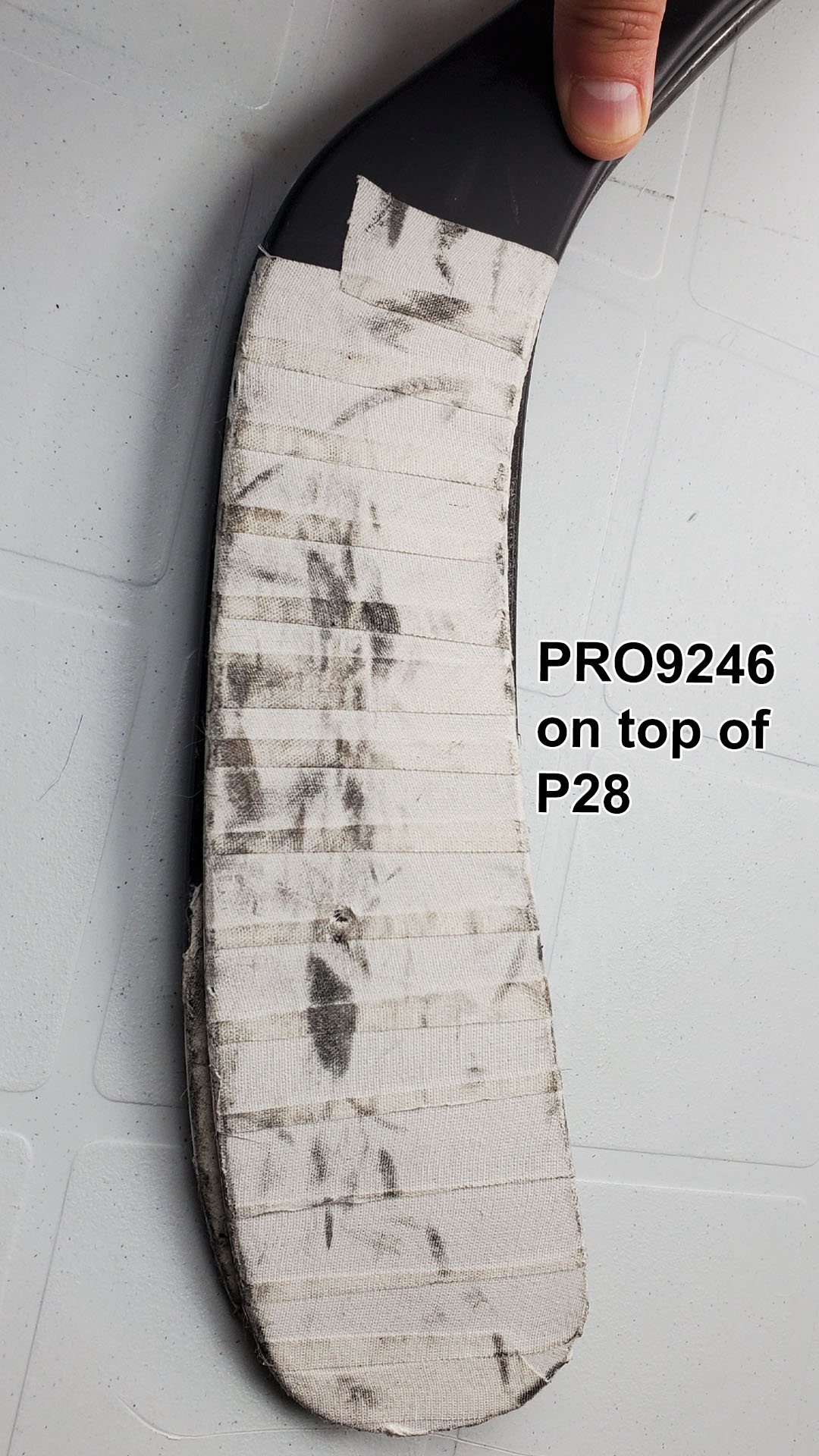
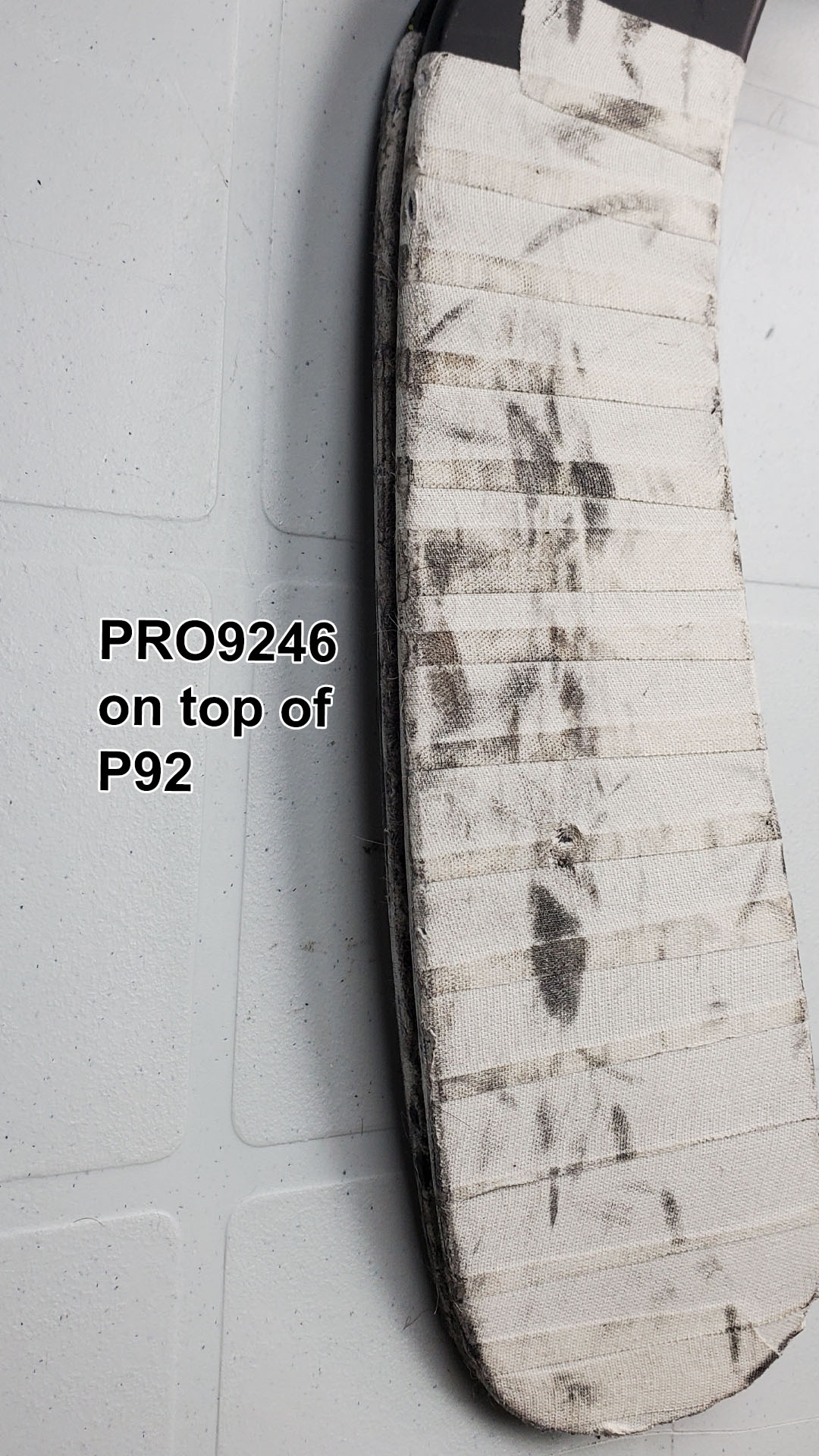
Whereas the transition from P92 and P29 users will be pretty seamless in terms of stick handling because of that blade shape. These are basically identical and when looking at them you shouldn’t see a difference at all.

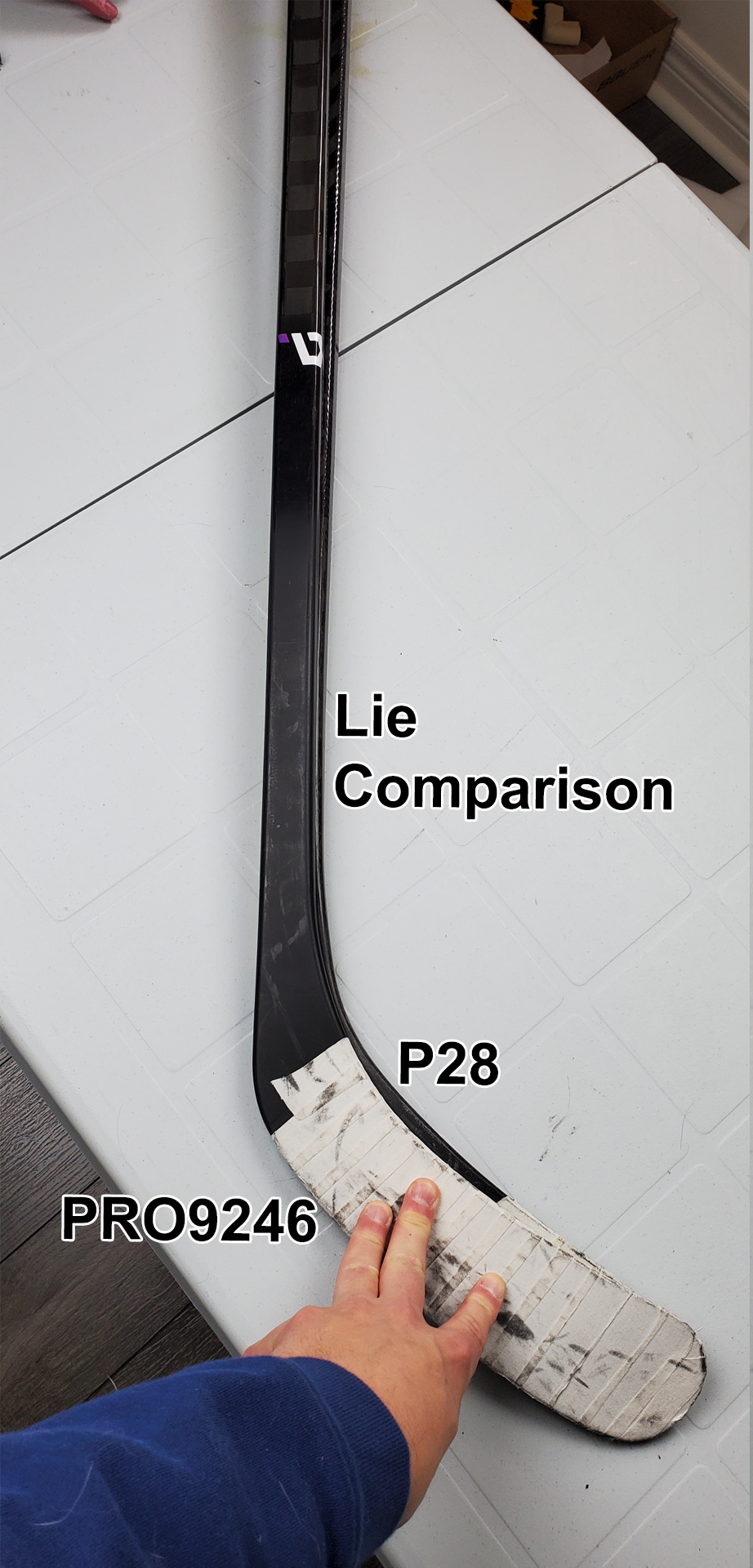
Finally we get onto the lie angle of the PRO9246 which one again surprising nobody is the same as the P92 and P29. Lie angles are a very annoying thing in the hockey world and basically everyone and every resource seems to have differing opinions and information as to which curves are which lie angle. But when I grabbed this PRO9246 next to the P92 they were identical. When I put it next to the P28 you can see the results below.
I know I will have people ask me “What is the best curve” or “what is the best curve for x position” and the answer WILL ALWAYS BE “It depends.” Like most of life, there is no definitive right answer and you have to find out what works best for your style of play and your game. I know many solid hockey players (including defenseman) that love a P28 and won’t get away from it, yet I hate it personally and prefer to stay with a more “neutral” toe curve while focusing on long distance passing (think breakouts) and keeping the puck low from the point for tip shots.
Hopefully this article and review of the Zegras PRO9246 curve is helpful and can give more insight in regards to this and the P90TM of which it is often compared to. Both curves are a mix between the most popular curves on the market being the P28 and P92. While I always say “try things until you find what you like” I understand that costs money and might not be possible so hopefully this has the information that can help you make a decision.
It would be greatly appreciated if you were shopping for hockey equipment if you checked out the links to Pure Hockey if you are in the US and Just Hockey if you are in Canada to help support the website so I can keep making more content and doing reviews!
While I also hate to promote my other things, it has become evident to me it is important to get a viewer base that will help me continue doing reviews like this (I can’t afford to always buy new equipment!).
So please check out my Instagram @hockeyreviewsca and subscribe to me on YouTube
 Hockey Reviews